


Systems
Standardized System Architectures for Inspection, Test & Automation
LM3 Technologies develops complete manufacturing systems that combine inspection, measurement, testing, controls, automation, and operator interaction within a coordinated production architecture. These systems are configured around the process, part flow, inspection requirements, and level of automation required for the application.
Our system portfolio includes in-line inspection, end-of-line verification, operator workstations, robotic inspection cells, automated measurement equipment, and specialized test systems. Each architecture can be adapted around the product, cycle time, manufacturing environment, and integration requirements of the customer.
In-Line Inspection
Real-Time Inline Inspection and Process Monitoring
PAQi In-Line enables real-time vision inspection embedded directly into fast-moving production lines. Whether inspecting for defects, dimensional variance, part presence, or label verification, In-Line systems are fully integrated with your existing PLC and MES frameworks. With QC Hero’s AI and support for GigE, USB3, and proprietary cameras (including SICK and Photoneo), this solution supports up to 6 synchronized cameras across multiple inspection zones, delivering rapid feedback and automatic quality sorting without disrupting takt time.


High-Resolution Industrial Cameras
Fixed-mount area scan cameras designed for fast image acquisition and reliable performance at production speeds.


PAQi Controller Unit
Modular industrial controller with built-in I/O, edge computing, and real-time factory communication protocols.


Barcode Scanning
Integrated code readers for high-speed 1D and 2D barcode scanning across complex product geometries.


Lighting
Optimized lighting systems for uniform image contrast and consistent defect visibility across varying materials.


Conveyor Integration
Configurable hardware and signaling designed to interface directly with moving production lines for real-time inspection.
System Features
Technical Overview
System Capabilities
PAQi In-Line systems combine high-resolution imaging, advanced AI vision, and industrial connectivity for continuous, automated quality control. Optional capabilities include lighting control, OCR, traceability, and real-time defect sorting.


Integration Points
 |
|---|
 |
 |
 |


Feature
Options
Details
Camera Resolution
Inspection Cycle Time
Detection Accuracy
Lighting Requirements
Part Handling
Trigger Method
Output Format
Data Logging
5 MP – 42 MP
1.5 – 3.0 sec
≥ 95% F1 Score
Diffuse / RGBW
Fixtured / Robot-placed
PLC / Robot / Sensor
Pass/Fail + Class/Value
Enabled
Based on part size and feature resolution
Includes image capture + AI inference
Using QC Hero AI models
Tuned per surface reflectivity and material
Consistent orientation preferred
Supports edge or software trigger
Includes defect category or measurement
Optional image + result export via API
Applications
Used for high-speed, continuous inspection of molded parts, assemblies, labels, and components without interrupting production.


End-of-Line Systems
End-of-Line Quality Inspection
Our end-of-line inspection systems are designed to deliver reliable, automated quality checks at the final stage of production. These systems integrate advanced AI vision to detect surface defects, missing components, and dimensional issues in real time. Built to match production speed and accuracy requirements, our EOL solutions help reduce rework, improve yield, and ensure that only defect-free parts move forward. Seamless integration with PLCs and plant systems provides full traceability and rapid feedback.


High-Resolution Industrial Cameras
Calibrated to capture fine surface detail and dimensional accuracy across entire assemblies in a single or multi-angle scan.
PAQi Controller Unit
Industrial-grade controller with built-in PLC and edge AI compute, providing synchronized control and rapid feedback for automated end-of-line tasks.


Lighting Enclosure
Fully enclosed lighting hoods reduce ambient light interference and standardize inspection conditions across shifts.

Lighting
Tailored lighting solutions enhance contrast for final-stage inspections, revealing surface flaws and missing features in fully assembled parts.


Robotics
Collaborative or industrial robots for automated part presentation, pass/fail sorting, or dynamic inspection angles.
System Features


Safety Device
Light curtains, area scanners, and e-stop systems ensure operator safety around robotic and automated motion zones.
Technical Overview
System Capabilities
GateKeeper systems are built to handle complex part geometries, automation sequences, and inspection criteria with fully integrated robotics, lighting enclosures, and vision systems.


Integration Points
|
|---|
|
|
|
Feature
Options
Details
Camera Resolution
Inspection Cycle Time
Detection Accuracy
Lighting Requirements
Part Handling
Trigger Method
Output Format
Data Logging
5 MP – 42 MP
1.5 – 3.0 sec
≥ 95% F1 Score
Diffuse / RGBW
Fixtured / Robot-placed
PLC / Robot / Sensor
Pass/Fail + Class/Value
Enabled
Based on part size and feature resolution
Includes image capture + AI inference
Using QC Hero AI models
Tuned per surface reflectivity and material
Consistent orientation preferred
Supports edge or software trigger
Includes defect category or measurement
Optional image + result export via API
Applications
Final-stage inspection of complex assemblies, verifying quality, completeness, and compliance before product release.


Inspection Cells
Standalone Vision Cells for Automated Quality Control
PAQi CellView is a flexible vision inspection platform deployed as a standalone cell for off-line or supplemental quality checks. Built to accommodate evolving production needs, it supports multi-angle camera setups, integrated lighting, and both robotic or manual part presentation methods. Designed for high-mix, low-volume environments or fast-changing inspection requirements, CellView serves as a configurable base for running QC Hero models, traditional tools like VBAI, or hybrid vision stacks. Full traceability and seamless connectivity ensure accurate, recorded results across all inspection workflows.


High-Resolution Industrial Cameras
Delivers detailed imaging for individual part evaluation, ideal for manual or batch inspections of low-volume components.
PAQi Controller Unit
Ruggedized inspection controller with real-time factory communication and native support for AI vision models.
Lighting Enclosure
Fully enclosed lighting hoods reduce ambient light interference and standardize inspection conditions across shifts.
Lighting
Optimized lighting systems for uniform image contrast and consistent defect visibility across varying materials.
Robotics
Collaborative or industrial robots for automated part presentation, pass/fail sorting, or dynamic inspection angles.
System Features
Safety Device
Light curtains, area scanners, and e-stop systems ensure operator safety around robotic and automated motion zones.
Technical Overview
System Capabilities
PAQi CellView systems can be configured for surface inspection, dimensional validation, and barcode reading. Options include precision part fixturing, rotary tables, custom lighting, and offline result review portals.


Integration Points
 |
|---|
 |
 |
 |
Feature
Options
Details
Camera Resolution
Inspection Cycle Time
Detection Accuracy
Lighting Requirements
Part Handling
Trigger Method
Output Format
Data Logging
5 MP – 42 MP
1.5 – 3.0 sec
≥ 95% F1 Score
Diffuse / RGBW
Fixtured / Robot-placed
PLC / Robot / Sensor
Pass/Fail + Class/Value
Enabled
Based on part size and feature resolution
Includes image capture + AI inference
Using QC Hero AI models
Tuned per surface reflectivity and material
Consistent orientation preferred
Supports edge or software trigger
Includes defect category or measurement
Optional image + result export via API
Applications
Ideal for off-line inspection, spot checks, and high-mix part evaluations.


Inspection Workbenches
Manual Workstation Inspection
PAQi Workbench transforms manual inspection into a digitized, guided, and trackable process. Tailored for operators working on manual or semi-automated lines, Workbench includes guided vision prompts, AI detection, and results logging — all from a compact footprint. It's ideal for low-volume, high-variation production or tasks requiring human interaction. Our workbenches support camera-mounting flexibility, operator prompts, defect highlighting, and traceable records — all powered by QC Hero and enhanced by PAQi’s industrial-grade software tools.


High-Resolution Industrial Cameras
Captures clear, close-range images of manually positioned components with support for various fields of view.
PAQi Controller Unit
Ruggedized inspection controller with real-time factory communication and native support for AI vision models.


Lighting Enclosure
Shields from overhead lighting to create a consistent, inspection-optimized environment for operator workflows.

Lighting
Configured for tabletop conditions, enabling precise illumination of fine surface defects and part features.


Custom Fixturing
Ergonomic benches with guides, fixturing, or adjustable platforms tailored for consistent operator efficiency.
System Features
Technical Overview
System Capabilities
PAQi Workbenches support manual inspection with guided imaging, real-time defect feedback, and traceable result logging. Options include camera arms, custom lighting, barcode readers, and ergonomic accessories.


Integration Points
|
|---|
|
|
|
Feature
Options
Details
Camera Resolution
Inspection Cycle Time
Detection Accuracy
Lighting Requirements
Part Handling
Trigger Method
Output Format
Data Logging
5 MP – 42 MP
1.5 – 3.0 sec
≥ 95% F1 Score
Diffuse / RGBW
Manually placed / Fixtured
Manual / Sensor / Touch
Pass/Fail + Class/Annotation
Enabled
Based on part size and feature resolution
Dependent on load, align, trigger speed
Using trained AI models or rule-based detection
Tuned for material contrast & surface highlighting
Adjustable fixtures for consistent positioning
Operator or automation-assisted capture
Optionally includes defect location mapping
Captures image snapshots, operator ID, and defect type
Applications
Designed for manual inspection of high-variation parts, operator-guided checks, and flexible quality control setups.


MoldView Systems
Injection Molding Defect Inspection
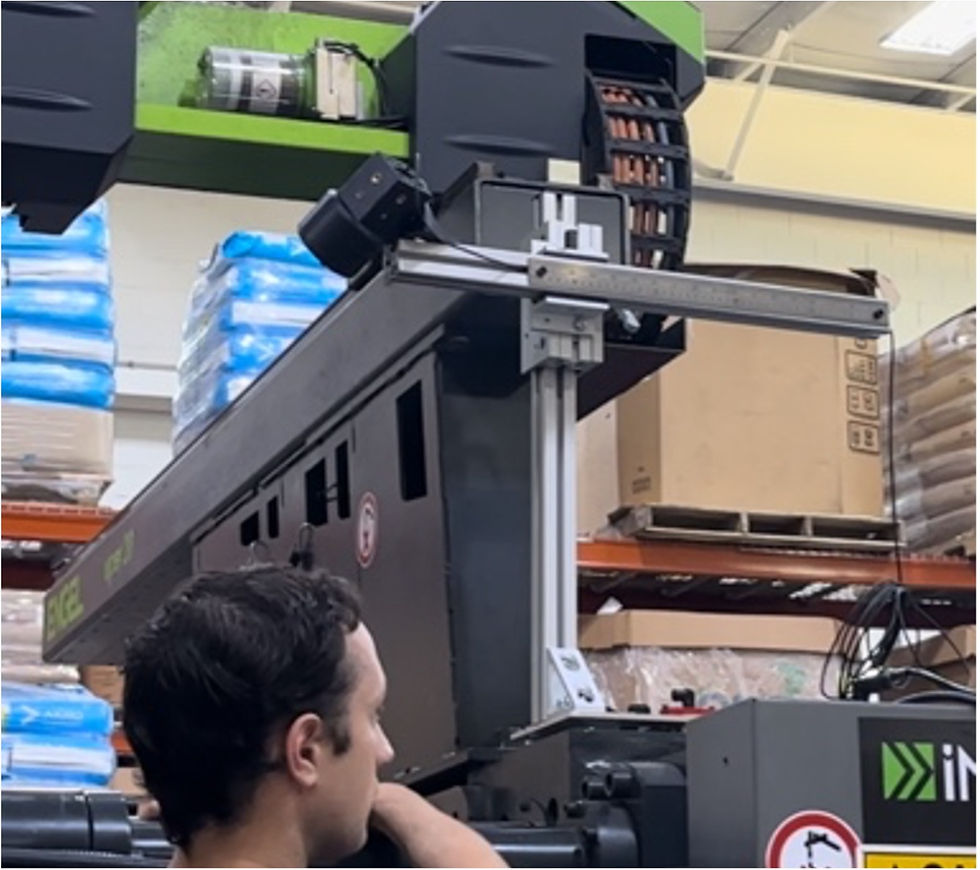
MoldView is LM3 Technologies’ configurable vision toolkit for injection molding inspection, engineered to deploy directly at the press or downstream. Rather than a preconfigured product, MoldView serves as a flexible foundation that supports a wide range of deployment strategies—including robot-mounted camera systems, end-of-arm tooling with integrated vision, conveyor-based post-ejection inspection, or fixed camera stations adjacent to the press. Built on the robust PAQi platform, MoldView enables high-speed defect detection, part verification, and process feedback with tailored camera and lighting configurations. It empowers molders to catch defects immediately after ejection, prevent downstream waste, and adapt vision coverage to meet evolving production requirements.


High-Resolution Industrial Cameras
High-output, uniform lighting enables consistent illumination of clear or textured molded parts during inspection.
PAQi Controller Unit
Ruggedized inspection controller with real-time factory communication and native support for AI vision models.


Flexible Mounting
Customizable brackets and adjustable mounts ensure optimal imaging angles across press sizes and mold types.
System Features


Thermal Imaging
Infrared thermal cameras detect hot spots, short shots, or flow issues immediately after part ejection from the mold cavity.
Lighting
High-output, uniform lighting enables consistent illumination of clear or textured molded parts during inspection.
Technical Overview
System Capabilities
PAQi MoldView is a flexible inspection platform for molded parts, enabling robot-mounted, conveyor-based, or EOAT-integrated imaging to detect defects immediately after ejection. It reduces scrap and supports adaptable inspection strategies across molding operations.


Integration Points
 |
|---|
 |
 |
 |
 |
 |
Feature
Options
Details
Camera Resolution
Inspection Cycle Time
Detection Accuracy
Lighting Requirements
Part Handling
Trigger Method
Output Format
Data Logging
5 MP – 42 MP
1 second
≥ 95% F1 Score
Integrated / Mold Mounted
In-mold / Robot
Molding Machine Signal / PLC
Pass/Fail + Defect Class
Enabled
Higher resolution for detailed feature inspection
Synced with mold cycle
Based on trained AI and rule-based algorithms
Optimized for glossy, matte, or textured surfaces
Captures image at point of ejection
Supports edge or software trigger
Optional image capture per shot
Cycle data and defect records for reporting and analysis
Applications
MoldView Inspects molded parts at the EOAT or conveyor side for higher quality output and mold maintenance.


Measurement Systems
Precision Dimensional Inspection and Measurement
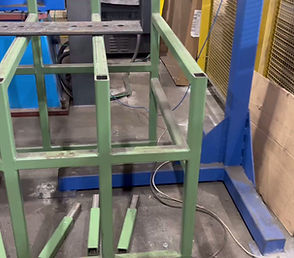
PAQi Measure delivers automated, high-precision dimensional verification for components with critical tolerance requirements. Built for automotive, medical, and precision manufacturing environments, it combines structured laser triangulation and calibrated 3D optics with QC Hero’s AI-driven geometry analysis and traditional metrology algorithms. The system captures true X-Y-Z point-cloud data in real time, enabling measurement of hole diameters, edge positions, surface flatness, bend angles, and other key features with sub-micron repeatability.


PAQi Controller Unit
Modular industrial controller with high-performance processing for running measurement algorithms and factory integration.
System Features
Technical Overview
System Capabilities
PAQi CellView systems can be configured for surface inspection, dimensional validation, and barcode reading. Options include precision part fixturing, rotary tables, custom lighting, and offline result review portals.


Integration Points
 |
|---|
 |
 |
 |
 |
Feature
Options
Details
Camera Resolution
Inspection Cycle Time
Measurement Tolerance
Lighting Requirements
Part Handling
Trigger Method
Output Format
Data Logging
5 MP – 42 MP
1.5 – 3.0 sec
± 0.05 mm – ± 0.25 mm
Controlled / Adjustable RGBW
Slide-based / Fixtured
Manual / PLC / Photoeye
Pass/Fail + Dimension Log
Enabled
Based on part size and feature resolution
Includes capture, measurement, and tolerance
Depends on calibration and setup configuration
Tuned per material geometry
Supports cell-based or operator-initiated
Supports repositioning or multi-angle setups
Logs tolerance status and actual measurement
Tied to part ID or operator session for traceability
Applications
Used to verify part dimensions, hole placements, surface geometries, and tolerance compliance across high-mix or precision manufacturing environments.

Assembly Systems
Multi-Layer and Sub-Assembly Validation
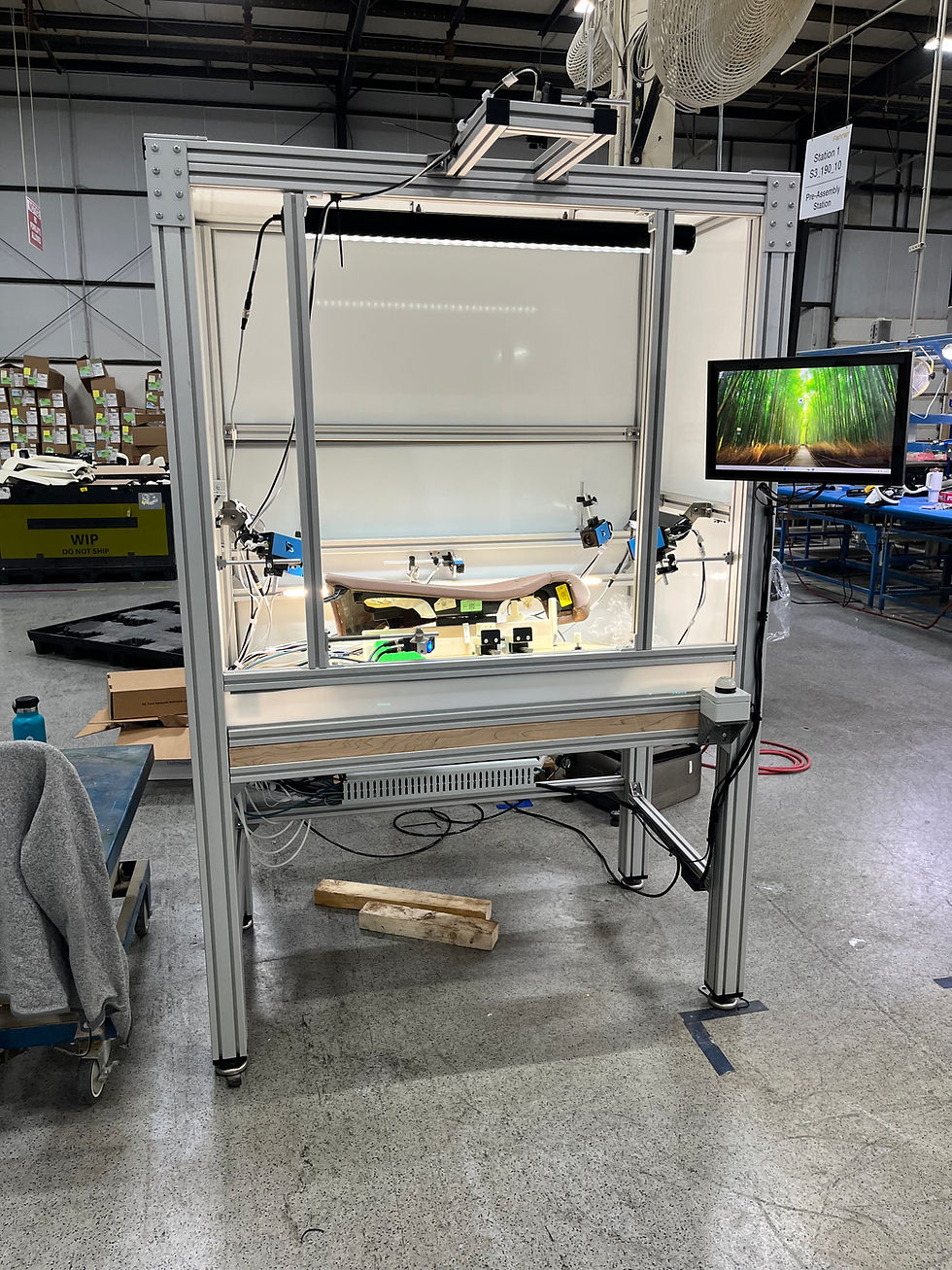
PAQi LayerCheck ensures quality at every layer of an assembly — from fasteners to seals to surface materials. Using a single overhead camera and QC Hero’s multi-object detection, LayerCheck identifies missing, misplaced, or defective components during each phase of sub-assembly. The system can sequence inspections, lock out further assembly if errors are found, and integrate with robotic and PLC systems to prevent flawed builds from progressing. It’s a cost-effective, camera-efficient solution for layered builds, including dashboards, door panels, and control units.


Operator Triggering and Feedback
Simple interfaces allow manual part advancement and provide immediate pass/fail feedback.
PAQi Controller Unit
Ruggedized inspection controller with real-time factory communication and native support for AI vision models.


High Resolution Cameras
Flexible optics capture detailed images at varying focal lengths to inspect layered and sub-assembled components with precision.

Lighting
Optimized lighting systems for uniform image contrast and consistent defect visibility across varying materials.
System Features
Technical Overview
System Capabilities
Designed for complex part builds like automotive headliners or electronic assemblies, LayerCheck provides full verification across hidden, internal, and stacked components using AI and traditional vision methods.


Integration Points
|
|---|
|
|
|
Feature
Options
Details
Camera Resolution
Inspection Cycle Time
Detection Accuracy
Lighting Requirements
Part Handling
Trigger Method
Output Format
Data Logging
5 MP – 42 MP
1.5 – 3.0 sec
≥ 95% F1 Score
Diffuse / Polarized / RGBW
Conveyor / Robot / Manual
PLC / Robot / Operator
Pass/Fail + Assembly Status
Enabled
Dependent on feature size and field-of-view
Dependent on part complexity and scope
Using QC Hero AI models
Tuned per surface reflectivity and material
Flexible configuration based on workflow
Triggered by station control logic or manual input
Identifies missing, misaligned, or incorrect components
Tracks part IDs, operator ID, defect codes, and image
Applications
PAQi LayerCheck validates multi-layer assemblies and stacked components using multi-angle imaging and layer-specific AI inspection routines.

Pick & Place
Vision-guided Robotic Pick and Place
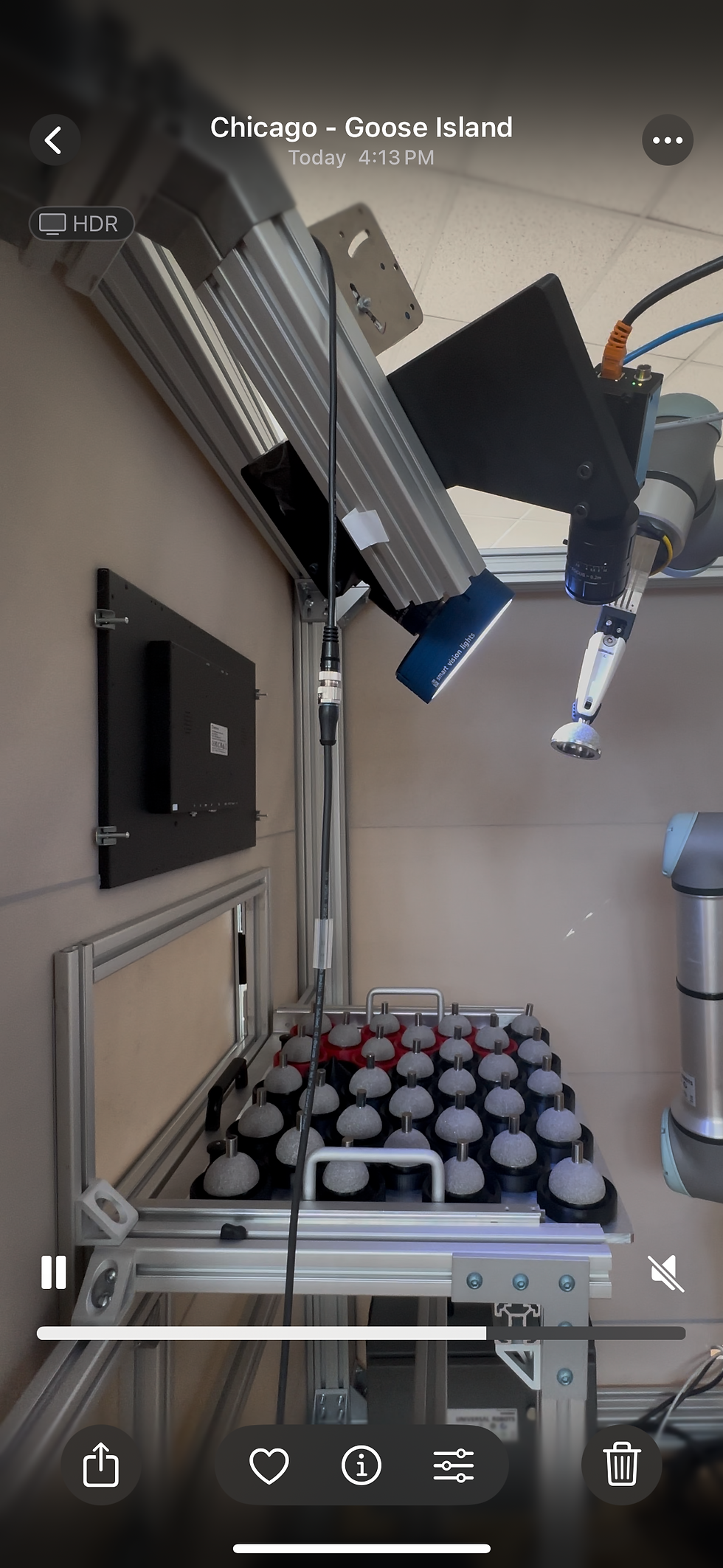
LM3’s Pick and Place Systems are engineered to automate the movement, orientation, and placement of parts using AI-guided vision and robotic actuation. Whether it’s bin picking, precise placement in trays or fixtures, or transferring parts between production zones, these systems bring speed, repeatability, and smart decision-making to high-throughput environments. Integrated with our PAQi vision controller, they identify part position, orientation, and quality before initiating movement, ensuring that only good parts proceed and reducing costly errors and cycle time.

System Features

PAQi Controller Unit
Executes vision-guided movements, synchronizing robot commands with real-time 3D image analysis and communication.


SICK PLB Series
3D vision system for precise localization and guidance of randomly placed parts in bin-picking and dynamic placement tasks.
Robots
Integrated robotic arms deliver high-speed part handling and placement with coordinated motion tied to vision feedback.
Technical Overview
System Capabilities
PAQi Pick and Place systems integrate vision-guided robotics and part localization software to enable dynamic part handling. Using calibrated vision and 3D cameras, the system supports bin picking, conveyor tracking, and precise part placement in real-time with minimal human input.

Integration Points
 |
|---|
 |
|
Metric
Range
Details
Camera Resolution
Inspection Cycle Time
Targeting Accuracy
Lighting Requirements
Part Handling
Trigger Method
Output Format
Data Logging
5 MP – 42 MP
< 1 second (vision targeting)
± 1–3 mm typical
Integrated / Overhead Lighting
Bin, Tray, Conveyor, Fixed
PLC / Robot / Sensor
Pick Coordinates / Orientation
Enabled
Higher available for precision pick tasks
Robotic motion cycle is separate
Depends on camera height and calibration
Adjustable to minimize shadows and glare
Designed for varied presentation methods
Triggered when pick position needed
X, Y, Z, and rotation relative to robot TCP
Optional pick and placement event tracking
Electrical & Function Testing Systems
Continuity, Function, and Electrical Testing Systems
LM3’s Electrical Testing Systems are designed to validate the continuity, resistance, short circuits, and signal integrity of electromechanical and connectorized components during production. These systems are powered by our PAQi controller and integrate high-speed electrical probes, signal generators, and programmable logic to automate the detection of open circuits, cross-wiring, and incorrect pin assignments. Built to handle high-mix, high-throughput operations, they ensure every part meets electrical compliance before reaching downstream assembly or packaging. Designed for standalone operation or integration with vision inspection and traceability systems, these test stations help prevent field failures and warranty risks.

System Features


Custom Test Connectors
Precision-designed electrical interfaces tailored to fit and test unique part geometries and contact configurations.
Full Function and Electrical Testing
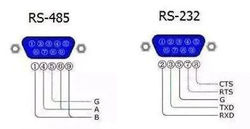
Interfaces with test systems over protocols like CAN, LIN, Modbus, and Ethernet/IP, coordinating measurements and pass/fail.


Custom Test Cables
Engineered cable assemblies and mechanical fixtures ensure secure, repeatable connections during high-speed testing.


Integration Points
 |
|---|
 |
 |
 |
 |
Technical Details
System Features
PAQi Electrical Testing integrates digital continuity and resistance testing with vision-based validation to ensure critical components meet electrical specs. Systems are fully configurable for high-mix production and can combine mechanical test fixtures with multi-channel instrumentation and MES connectivity.
Metric
Range
Details
Continuity Range
Resistance Range
Voltage Range
Inspection Cycle Time
Trigger Method
Output Format
Data Logging
Part Presentation
0 – 10 Ω
0 – 1 M Ω
0 – 48V DC
2 – 6 sec
Operator Start / PLC Command
Test Report + Pass/Fail
Enabled
Fixtured or Manual
Adjustable threshold limits based on test profile
Capable of fine resistance validation
Available for active circuit validation
Depends on total number of points tested
Manual or automated triggering options
Flexible setups based on production needs
Includes full test matrix if desired
Full traceability with timestamped result records